
Start with the music you want to hear
Music is often the strongest starting point when deciding how to choose a music festival, but a broad genre label gives only a first impression. Programme descriptions, artist notes and performance formats can reveal whether the event matches the sounds you enjoy. Jazz and Blues Festival Guide is an independent English-language information guide, not a shop, service provider, school or event organisation; it offers no products or services. Compare the published details with your own listening preferences before weighing other parts of a festival choice.
Check genre labels against programme detail
A label such as jazz or blues can cover artists with very different sounds, so read beyond the headline category. Look for named styles, instruments, ensemble formats and descriptions of the performance. A piano trio, a large ensemble and a solo singer create different listening experiences even when a programme groups them under one genre.
Artist notes can add useful context: they may describe an acoustic or electric approach, vocal or instrumental work, or a blend of influences. Treat these details as clues, not guarantees. A short description may not explain every musical choice, so compare several programme entries rather than forming an impression from one phrase.
| Broad label | Programme details to look for | What those details suggest |
|---|---|---|
| Jazz | Swing, hard bop or modal jazz; piano trio, small combo or big band | Style names and ensemble size help distinguish rhythmic feel and arrangement scale. |
| Blues | Delta or Chicago blues; acoustic or electric instrumentation; solo singer or band | These clues indicate whether the performance is more stripped back or built around amplified ensemble playing. |
| Jazz and blues | Separate artist descriptions, named styles and set formats | Check whether the programme presents distinct styles across different performances or describes a particular crossover. |
Use the details to narrow your expectations, then listen to a sample from an artist when one is available through a legitimate source. That can help you compare the advertised style with the artist’s actual sound without assuming that every performer under the same label will sound alike.
Balance familiar and unfamiliar performances
A strong music festival lineup can include both recognisable names and artists you have not heard before. Start by identifying the styles or performers you already enjoy, then check how much of the published programme reflects those preferences. Familiar acts can give you a reliable musical anchor, while less familiar performers may introduce a new voice, arrangement or subgenre.
Consider the balance that feels worthwhile to you rather than treating familiarity as the only measure of value. If you prefer a predictable sound, look for several programme entries with clear style descriptions. If musical variety matters more, leave room for artists whose notes mention unfamiliar influences or formats, and sample their music before making a judgement.
Check the current published programme independently before deciding what the event is likely to sound like; descriptions and artist details can provide more specific evidence than a genre label. A label does not guarantee a particular sound, so judge the festival by the published programme, not the label alone.
Festival formats and settings
A festival’s format determines whether performances and other activities are concentrated in one place or spread across several venues. Its setting also affects the experience: a concert hall, an outdoor park, a small town and a large city each bring different surroundings and movement patterns. When comparing options in a music festival guide, consider how far you may need to walk and where you can pause between performances. The best fit depends on whether you prefer a contained event or a changing route through indoor or outdoor spaces.
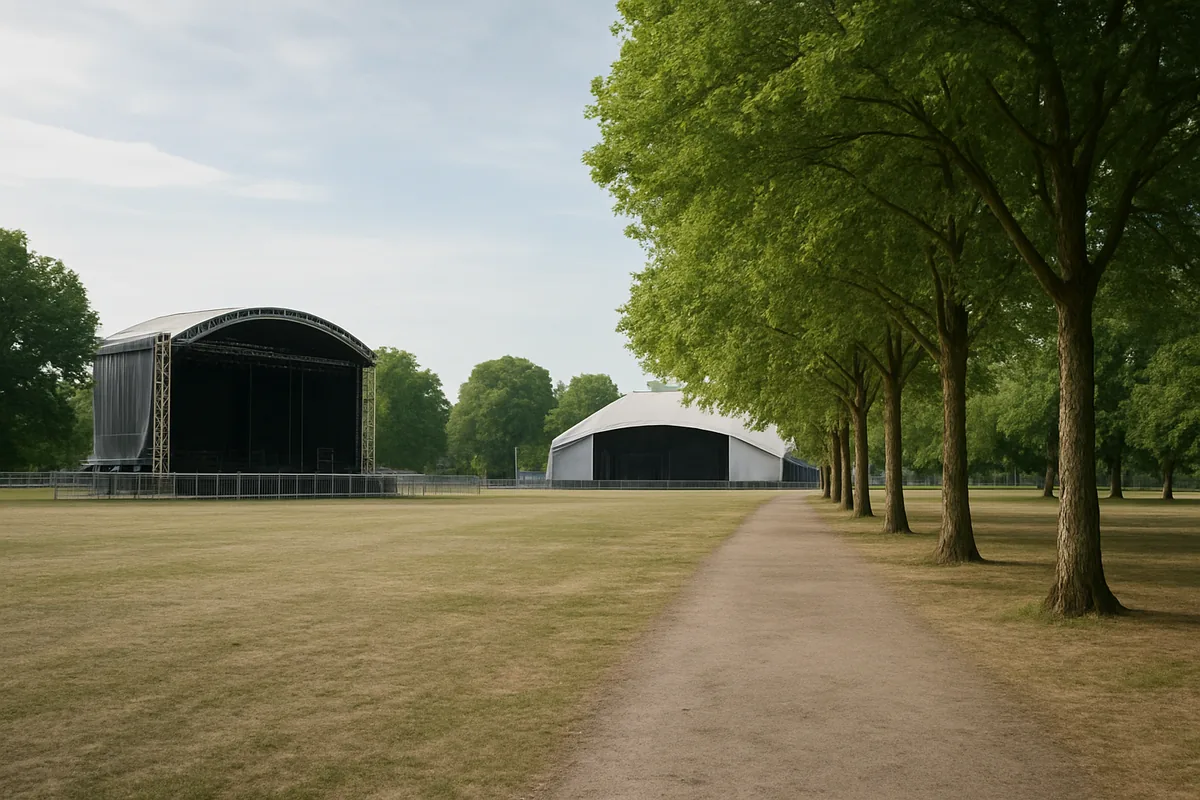
Compare festival formats and settings
Use the format and setting together to picture how the event may feel: one venue in a town is different from several stages across a city. Each option can work well for particular preferences, while creating its own practical trade-offs.
| Format or setting | What it may suit | Possible limitations |
|---|---|---|
| Single venue | A concert hall, field or enclosed site may suit someone who wants performances and facilities gathered in one identifiable place. A single site can make it easier to settle into the event without navigating between separate venues. | The surrounding environment may offer less variety, and popular areas within the site can feel busy at the same time. The experience may be less appealing if you want to visit different neighbourhoods between performances. |
| Multi-venue | Several halls, clubs or outdoor stages may suit someone who enjoys visiting distinct performance spaces. A route through different venues can make the wider town or city part of the event. | Moving between venues takes time and may require walking along public streets or using local transport. Distances, venue entrances and different layouts can make the schedule feel less continuous than a single-site event. |
| Indoor | A theatre, concert hall or club may suit people who prefer a defined performance space and a break from changing outdoor conditions. Walls, seating areas and fixed entrances can give the event a more contained feel. | Indoor capacity and circulation areas are physically bounded, so crowds may feel concentrated in foyers or between sets. The surroundings are less open than a park or field, and moving between separate indoor venues still takes planning. |
| Outdoor | A park, field or waterfront setting may suit someone who likes open-air performances and room to move between areas. The landscape can contribute to the atmosphere and offer a different feel from a hall or club. | Conditions can change with sun, wind or rain, and grass, gravel or uneven paths may affect how easily people move around. Open space can also mean longer walks between a stage, food area and an exit. |
| Town location | A town setting may suit someone who wants a smaller-scale backdrop, with venues or event areas potentially close to a central street or square. Local cafés and public spaces can add to the sense of place. | There may be fewer nearby alternatives if one area becomes crowded or if accommodation and transport choices are limited. A festival spread beyond the centre can still involve substantial travel between locations. |
| City location | A city setting may suit someone who enjoys combining performances with restaurants, museums or other urban surroundings. A network of streets and public transport can connect venues in different neighbourhoods. | Busy streets, traffic and longer cross-city journeys can add complexity to moving between performances. The surrounding urban activity may also make the event feel less like a distinct, self-contained site. |
These are broad possibilities rather than fixed rules: an outdoor site can be compact, while a city-centre event can use venues only a short walk apart. Compare the actual venue layout and surrounding area to judge whether the setting matches the kind of experience you want.
Consider pace, movement and surroundings
A concentrated layout keeps stages and shared areas within one site, so the day may feel continuous and pauses can happen without leaving the grounds. The trade-off is that the same paths, entrances or gathering areas may become busy at changeover times. A spread-out layout creates a more exploratory pace: walking between a club, hall and outdoor stage can break up the day, but travel time becomes part of the experience.
Indoor spaces offer a defined setting, while an outdoor field or park brings open air and changing weather into the event. In a town, nearby streets may give breaks a quieter, local feel; in a city, traffic, public transport and activity across several neighbourhoods can make transitions more stimulating or more tiring. Think about whether you want a compact day with fewer transitions or a route that takes you through varied surroundings. Choose the format and setting that fit your preferred pace and the kind of place you want around you.
Match the event to your needs
The right event should fit the way you want to spend each day, not just the performances you hope to hear. Think about how much time you want to spend moving between venues, and whether a fixed base would make the schedule easier to manage. If access requirements shape your plans, the details need to match your specific needs at each venue. Festival information can vary between editions, so use the organiser’s current event details rather than relying on an older description. These practical considerations help narrow down the best music festival for you.
Choose a format that fits your preferred pace
If you prefer fewer venue changes, look for a concentrated format with performances gathered at one site or around a clearly identified central venue. Staying in one place can reduce time spent navigating unfamiliar streets, checking directions and allowing for transfers between sets. Review the event outline to see whether stages, entrances and performance spaces are grouped together; a single-site event can still involve walking between areas, so check the site plan when one is available.
Pay attention to the shape of each day, not just the number of acts. A programme with performances scheduled across a long span may require more waiting or late finishes, while a compact schedule can make it easier to plan breaks. Check the published start and end times, the number of stages operating at once and whether the outline shows overlaps. Those details reveal how much moving around or choosing between simultaneous events the day may involve.
If a broader programme matters more than staying in one place, compare the published event outline for its planned variety and distribution. Look at how many distinct performance areas are included, whether activities run at the same time and how the schedule changes from one day to the next. For example, an outline with several parallel stages offers more simultaneous choices than a single sequence of scheduled performances. Choose the arrangement that fits your preferred pace: a concentrated plan for fewer transitions, or a wider schedule when variety is the priority.
Check access information against your requirements
If accessibility affects your decision, start with the organiser’s current access information and compare it with your own requirements. Check the details for the specific edition and each venue you plan to attend; arrangements may differ between locations or change from one year to another.
- Check whether step-free routes connect the entrance, performance areas and other spaces you expect to use, and whether any route includes a lift or a steep surface.
- Look for seating information, including where seats are available, whether they can be reserved and what the organiser says about accessible viewing areas.
- Confirm the location and availability of accessible toilets, and whether they are near the stages or other areas you expect to visit.
- If the event uses multiple venues, find out how travel between them works and whether the published routes suit your mobility and timing needs.
- Review how to contact the access team, which details they ask you to provide and whether questions should be raised before booking.
- Check venue-specific information for entrances, lifts and any access arrangements you rely on, rather than assuming one site’s facilities apply elsewhere.
Match each relevant detail to your needs before deciding, and contact the organiser if the current information does not answer a practical question. A choice is more dependable when it is based on confirmed arrangements for the event and venues you intend to attend.
Common selection mistakes
A festival’s name, reputation, or previous edition can create expectations that do not match the event you will attend. Small assumptions about genre, travel between stages, or a familiar venue can affect how well the experience fits your plans. Check each decision against information published for the current edition, rather than relying on a title or memory. These checks make it easier to judge whether the festival’s programme and practical setup match what you expect.
Verify assumptions before choosing
A festival name is a useful first clue, but it is not a reliable description of every performance or practical detail. Before deciding, use the current official programme and venue information to test four assumptions that commonly shape expectations.
- Read the programme rather than treating the festival name as a promise: names can reflect a theme or history without describing every act in the current edition.
- Check individual performers and set descriptions for styles that interest you; a genre label for the event does not mean every performance will fit that sound.
- Look at the venue map and the stated locations of stages, because separate sites or distant areas can add substantial walking time between performances.
- Confirm that the details you are using apply to the current edition, including the programme, venue arrangement, and any changes published by the organisers.
For a music festival lineup, compare the descriptions of individual sets with your own expectations instead of relying on a broad label such as jazz, blues, or rock. An event may combine several styles, and performers within the same genre can still differ in sound, format, or emphasis. This check helps identify whether the programme offers the balance of familiar and unfamiliar music you want. For the music festival location, use the current venue map to identify whether stages are within one site or spread across separate spaces. Check the map scale, entrances, and any route information supplied by the organisers; a list of venues alone does not show how long a transfer may take. Base your choice on the published details for the edition you plan to attend, not on an assumption that the name or layout has stayed the same.
Use current information for practical details
Compare current official programme and venue information with what you personally expect from the event. If you expect a particular style, check the listed performers and set descriptions; if you expect stages to be close together, consult the venue map and the organisers’ stated locations. Look for material explicitly identified as applying to the current edition, since event details can change between editions. Past editions can help explain a festival’s history, but they cannot establish its current programme or layout. A returning event may change performers, use different spaces, or arrange its stages differently, so an old map or programme is not proof of what will be available now. Check assumptions against current official information before making your choice.
A festival choice checklist
A final check helps connect your music preferences with the practical conditions of attending. Review what the event publishes rather than relying on assumptions about its format or facilities. Give particular attention to information that affects your ability to participate, including access arrangements and travel guidance for the location. The checklist below can help you decide whether the available details fit your needs.
Check the essentials before deciding
Before committing to an event, compare its published details with the experience you want and the arrangements you can manage. Use these checks to identify missing information as well as clear matches.
- Music interests: Check whether the programme gives enough detail about genres, performance styles and unfamiliar acts to match the sounds you want to hear.
- Event format: Confirm whether the schedule and site information describe a single-stage event, several concurrent stages or a programme spread across multiple locations.
- Venue setting: Establish whether performances take place indoors, outdoors or across mixed spaces, and check what the venue says about its facilities.
- Access requirements: Review published information on step-free routes, viewing areas, accessible toilets, companion arrangements and how to request support for your specific needs.
- Current programme details: Read the latest official programme information, including performance descriptions and any published schedule changes, rather than relying on older summaries.
- Travel guidance: Check official travel advice relevant to the event’s location, including guidance for the region and any entry or transport considerations that apply to you.
- Practical fit: Compare the event’s stated policies, food and drink arrangements, accommodation information and on-site amenities with the requirements you need to attend comfortably.
Keep a short note of any essential detail that is unclear, such as whether an access facility is available throughout the event or only in a particular area. If a published answer is too general to assess your needs, seek clarification before making your decision.
Confirm current details and travel advice
Use the event’s official communications for the most recent programme, site information, access arrangements and operating policies. Check when each item was last updated, and compare related details: a site map, for example, should correspond to the stated venue layout, while access information should explain how facilities work on site. If an important point is missing or unclear, contact the event’s published information service and ask a specific question rather than assuming a standard arrangement.
For travel, consult relevant official government advice for the country or region where the event is held, as well as guidance from local transport or road authorities when it affects your route. Check applicable entry requirements, regional notices and planned transport changes close to departure; advice can vary by location and change over time. The published details should give you enough confidence that the programme, access arrangements and journey fit your needs.